
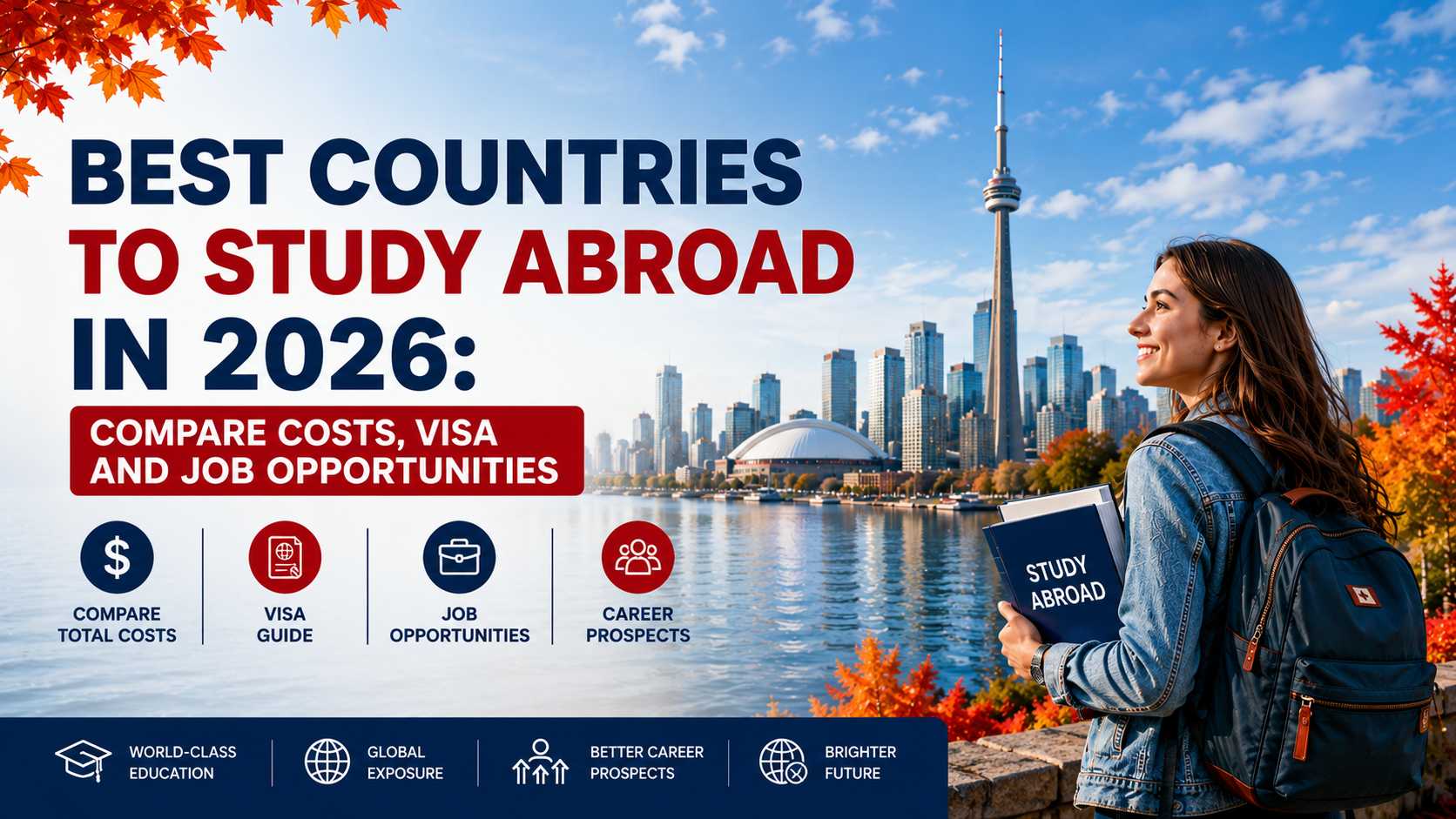
In today’s interconnected world, abroad study has become one of the most powerful ways for…
Best Countries to Study Abroad in 2026: Compare Costs, Visa And Job Opportunities
Best Countries to Study Abroad in 2026: Compare Costs, Visa & Job Opportunities
Choosing the best countries to study abroad is one of the biggest decisions you’ll make as an international student. The country you choose affects your education, career opportunities, quality of life, and even your chances of settling abroad after graduation.
With thousands of universities and hundreds of study destinations available, it’s natural to feel confused. Should you choose Canada for its welcoming immigration policies? Is Australia better for post-study work opportunities? Does Germany offer the most affordable education? Or is the UK still the top destination for world-class universities?
This comprehensive guide compares the best countries to study abroad in 2026, including tuition fees, living expenses, visa requirements, scholarships, part-time work options, post-study work permits, and career opportunities. Whether you’re planning to study engineering, business, healthcare, IT, or management, this guide will help you make an informed decision.
If you’re looking for personalized guidance, the experienced counselors at Nexa Overseas can help you choose the right university, prepare your application, secure your student visa, and begin your journey toward an international education.
Quick Comparison: Best Countries to Study Abroad in 2026
| Country | Average Tuition Fees | Living Cost (Yearly) | Work While Studying | Post Study Work Permit | PR Opportunities |
|---|---|---|---|---|---|
| Canada | CAD 15,000–35,000 | CAD 12,000–18,000 | Up to 24 hrs/week | Up to 3 Years | Excellent |
| Australia | AUD 20,000–45,000 | AUD 24,000–30,000 | 48 Hours/Fortnight | 2–6 Years | Very Good |
| United Kingdom | £11,000–38,000 | £10,000–15,000 | 20 Hours/Week | 2 Years | Moderate |
| USA | USD 20,000–50,000 | USD 12,000–20,000 | Campus Jobs | OPT Available | Limited |
| Germany | Low or No Tuition* | €11,000–13,000 | 120 Full Days | 18 Months | Excellent |
Why Study Abroad in 2026?
nternational education continues to open doors to better careers, global exposure, and higher earning potential. Universities across Canada, Australia, the UK, the USA, Germany, and other leading destinations are investing heavily in research, innovation, and industry partnerships, making 2026 an excellent time to study overseas.
Some of the biggest advantages include:
- Globally recognized university degrees
- Better career opportunities after graduation
- International work experience
- Multicultural learning environment
- Access to world-class research facilities
- Improved English communication skills
- Scholarship opportunities for international students
- Higher salary potential
- Opportunity to settle abroad in selected countries
However, every country offers different advantages. That’s why comparing costs, visa rules, employment options, and quality of education is essential before making a final decision.
How to Choose the Best Country to Study Abroad?
Instead of following trends, evaluate your options based on your academic goals, financial situation, and long-term career plans.
1. Tuition Fees
Different countries have significantly different tuition costs. Germany offers some of the most affordable education, while the USA generally has higher tuition fees.
2. Living Expenses
Your accommodation, transportation, food, insurance, and personal expenses should fit comfortably within your budget.
3. Visa Success Rate
Understanding visa requirements before applying helps reduce delays and increases your chances of approval.
4. Post-Study Work Opportunities
Many students prefer destinations where they can gain valuable work experience after graduation.
5. Career Prospects
Research the industries growing in each country. Countries experiencing skill shortages often provide better employment opportunities for graduates.
6. Permanent Residency Options
If you plan to build your career abroad, compare countries that offer structured immigration pathways after completing your education.
1. Canada
Canada consistently ranks among the best countries to study abroad because it combines high-quality education, affordable tuition compared to many Western countries, generous post-study work permits, and excellent immigration pathways.
Canadian universities are globally respected for research, innovation, engineering, healthcare, artificial intelligence, business, and computer science.
I am text block. Click edit button to change this text. Lorem ipsum dolor sit amet, consectetur adipiscing elit. Ut elit tellus, luctus nec ullamcorper mattis, pulvinar dapibus leo.
Why Choose Canada?
- World-renowned universities
- Safe and welcoming environment
- Affordable tuition compared to the USA
- High graduate employability
- Up to 3-year Post-Graduation Work Permit
- Excellent PR pathways
Average Costs
- Tuition Fees: CAD 15,000–35,000/year
- Living Cost: CAD 12,000–18,000/year
- Health Insurance: CAD 600–1,000/year
Popular Courses
- Business Management
- Computer Science
- Artificial Intelligence
- Healthcare
- Engineering
- Data Science
Explore our Study in Canada guide to learn more about universities, eligibility, and visa requirements.

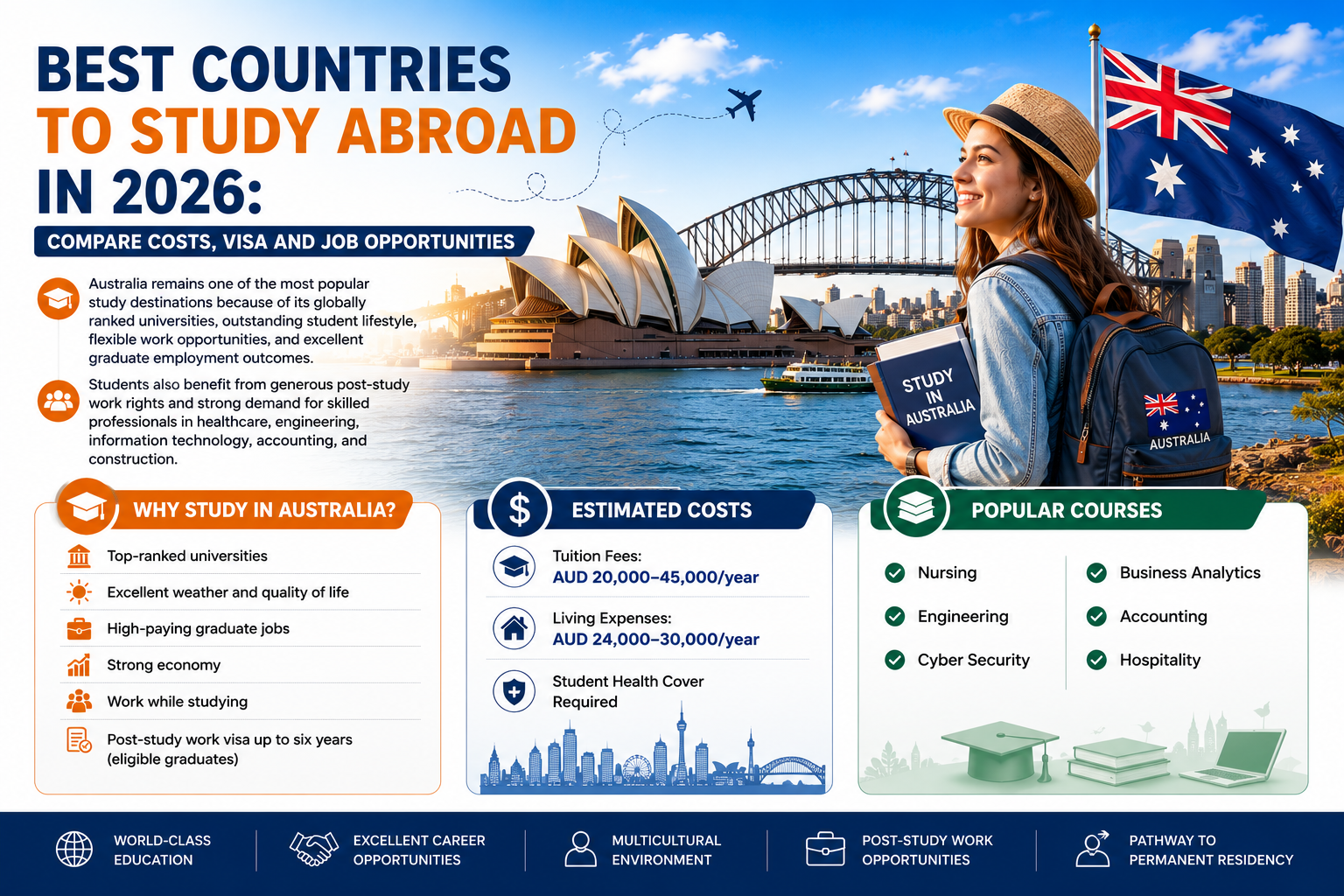
2. Australia
Australia remains one of the most popular study destinations because of its globally ranked universities, outstanding student lifestyle, flexible work opportunities, and excellent graduate employment outcomes.
Students also benefit from generous post-study work rights and strong demand for skilled professionals in healthcare, engineering, information technology, accounting, and construction.
Why Study in Australia?
- Top-ranked universities
- Excellent weather and quality of life
- High-paying graduate jobs
- Strong economy
- Work while studying
- Post-study work visa up to six years (eligible graduates)
Estimated Costs
- Tuition Fees: AUD 20,000–45,000/year
- Living Expenses: AUD 24,000–30,000/year
- Student Health Cover Required
Popular Courses
- Nursing
- Engineering
- Cyber Security
- Business Analytics
- Accounting
- Hospitality
Want to study in Australia? Visit our Study in Australia page for expert guidance.
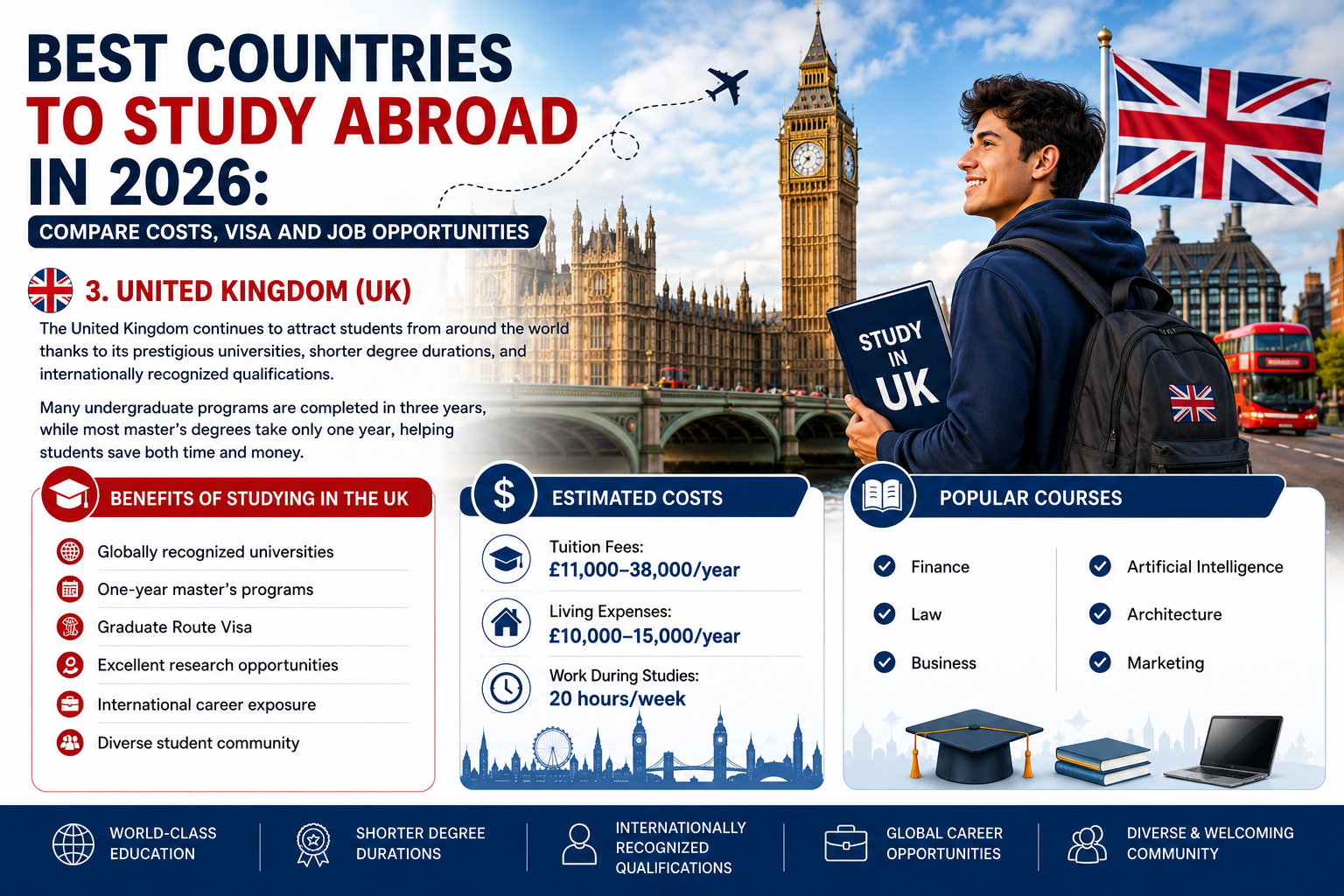
3. United Kingdom (UK)
The United Kingdom continues to attract students from around the world thanks to its prestigious universities, shorter degree durations, and internationally recognized qualifications.
Many undergraduate programs are completed in three years, while most master’s degrees take only one year, helping students save both time and money.
Benefits of Studying in the UK
- Globally recognized universities
- One-year master’s programs
- Graduate Route Visa
- Excellent research opportunities
- International career exposure
- Diverse student community
Estimated Costs
- Tuition Fees: £11,000–38,000/year
- Living Expenses: £10,000–15,000/year
- Work During Studies: 20 hours/week
4. United States (USA)
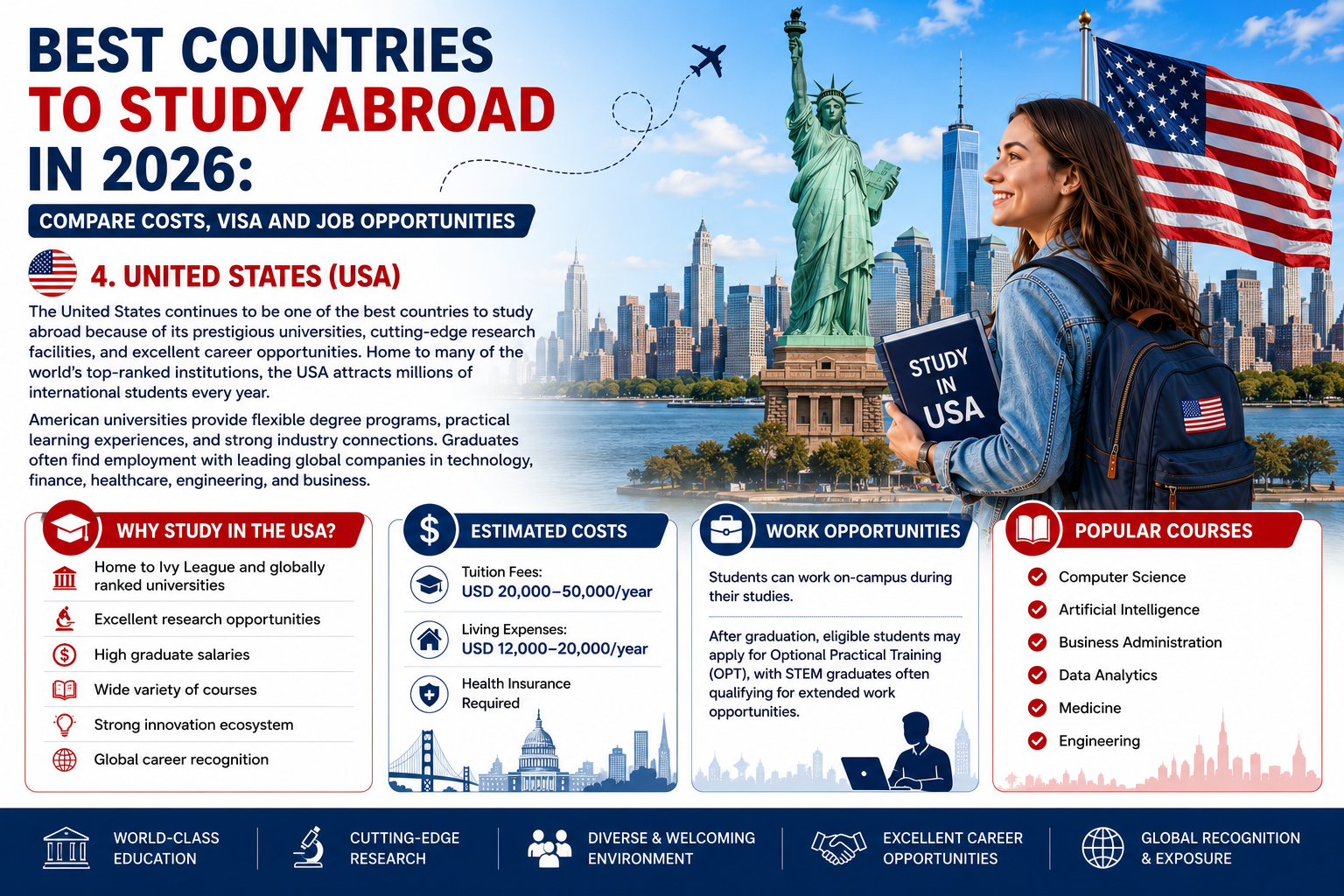
The United States continues to be one of the best countries to study abroad because of its prestigious universities, cutting-edge research facilities, and excellent career opportunities. Home to many of the world’s top-ranked institutions, the USA attracts millions of international students every year.
American universities provide flexible degree programs, practical learning experiences, and strong industry connections. Graduates often find employment with leading global companies in technology, finance, healthcare, engineering, and business.
Why Study in the USA?
- Home to Ivy League and globally ranked universities
- Excellent research opportunities
- High graduate salaries
- Wide variety of courses
- Strong innovation ecosystem
- Global career recognition
Estimated Costs
- Tuition Fees: USD 20,000–50,000/year
- Living Expenses: USD 12,000–20,000/year
- Health Insurance Required
Work Opportunities
Students can work on-campus during their studies. After graduation, eligible students may apply for Optional Practical Training (OPT), with STEM graduates often qualifying for extended work opportunities.
Popular Courses
- Finance
- Law
- Business
- Artificial Intelligence
- Architecture
- Marketing
Learn more about admissions, universities, and scholarships on our Study in UK page.
5. Germany
Germany has become one of Europe’s fastest-growing study destinations due to its affordable education, outstanding engineering universities, and excellent employment opportunities.
Many public universities charge minimal tuition fees, making Germany one of the most budget-friendly destinations for international students.
Why Choose Germany?
- Affordable education
- Top engineering universities
- Excellent research facilities
- Growing demand for skilled professionals
- Strong manufacturing industry
- Good PR opportunities
Estimated Costs
- Tuition Fees: Minimal at many public universities
- Living Expenses: €11,000–13,000/year
- Health Insurance Required
Popular Courses
- Mechanical Engineering
- Automobile Engineering
- Computer Science
- Artificial Intelligence
- Robotics
- Renewable Energy
Germany also allows graduates to remain in the country to search for employment after completing their studies, making it attractive for long-term career growth

6. Ireland
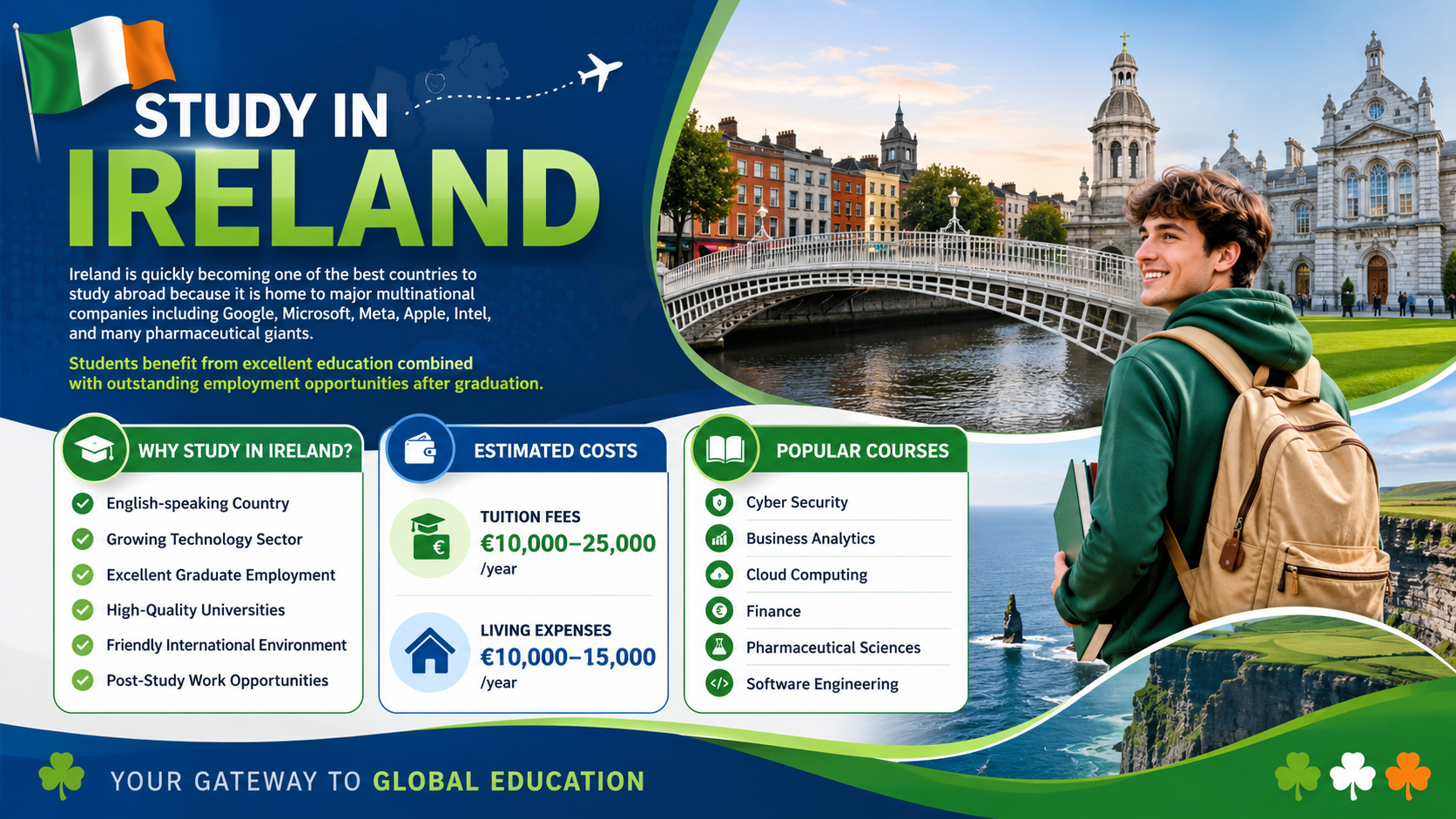
Ireland is quickly becoming one of the best countries to study abroad because it is home to major multinational companies including Google, Microsoft, Meta, Apple, Intel, and many pharmaceutical giants.
Students benefit from excellent education combined with outstanding employment opportunities after graduation.
Why Study in Ireland?
- English-speaking country
- Growing technology sector
- Excellent graduate employment
- High quality universities
- Friendly international environment
- Post-study work opportunities
Estimated Costs
- Tuition Fees: €10,000–25,000/year
- Living Expenses: €10,000–15,000/year
Popular Courses
- Cyber Security
- Business Analytics
- Cloud Computing
- Finance
- Pharmaceutical Sciences
- Software Engineering
7. France
France combines world-class education with rich culture, innovation, and affordable tuition at many public institutions. Students interested in fashion, luxury management, hospitality, culinary arts, business, and engineering often choose France.
Advantages
- Affordable public universities
- Global business schools
- Scholarship opportunities
- European work experience
- Excellent lifestyle
Estimated Costs
- Tuition Fees: €3,000–20,000/year
- Living Expenses: €10,000–15,000/year
Popular Courses
- Fashion Design
- Luxury Brand Management
- Hospitality
- International Business
- Engineering

8. Netherlands
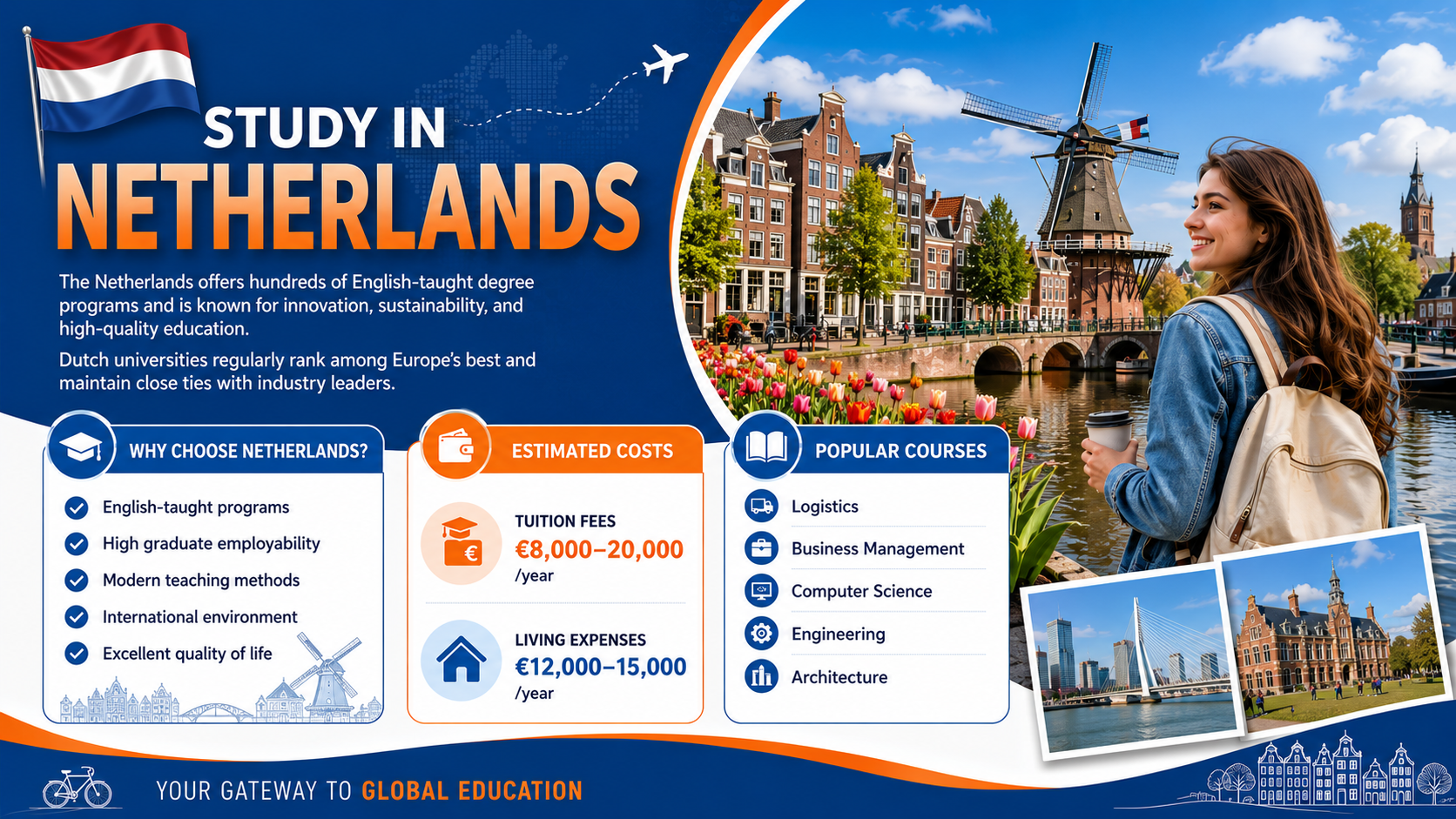
The Netherlands offers hundreds of English-taught degree programs and is known for innovation, sustainability, and high-quality education.
Dutch universities regularly rank among Europe’s best and maintain close ties with industry leaders.
Why Choose Netherlands?
- English-taught programs
- High graduate employability
- Modern teaching methods
- International environment
- Excellent quality of life
Estimated Costs
- Tuition Fees: €8,000–20,000/year
- Living Expenses: €12,000–15,000/year
Popular Courses
- Logistics
- Business Management
- Computer Science
- Engineering
- Architecture
9. New Zealand
New Zealand offers internationally recognized degrees, beautiful landscapes, and a peaceful lifestyle. The country is well known for high education standards and strong graduate outcomes.
Benefits
- Safe country
- Quality education
- Friendly communities
- Post-study work opportunities
- Excellent work-life balance
Estimated Costs
- Tuition Fees: NZD 20,000–40,000/year
- Living Expenses: NZD 15,000–20,000/year
Popular Courses
- Agriculture
- Healthcare
- Tourism
- Engineering
- Information Technology

10. Singapore
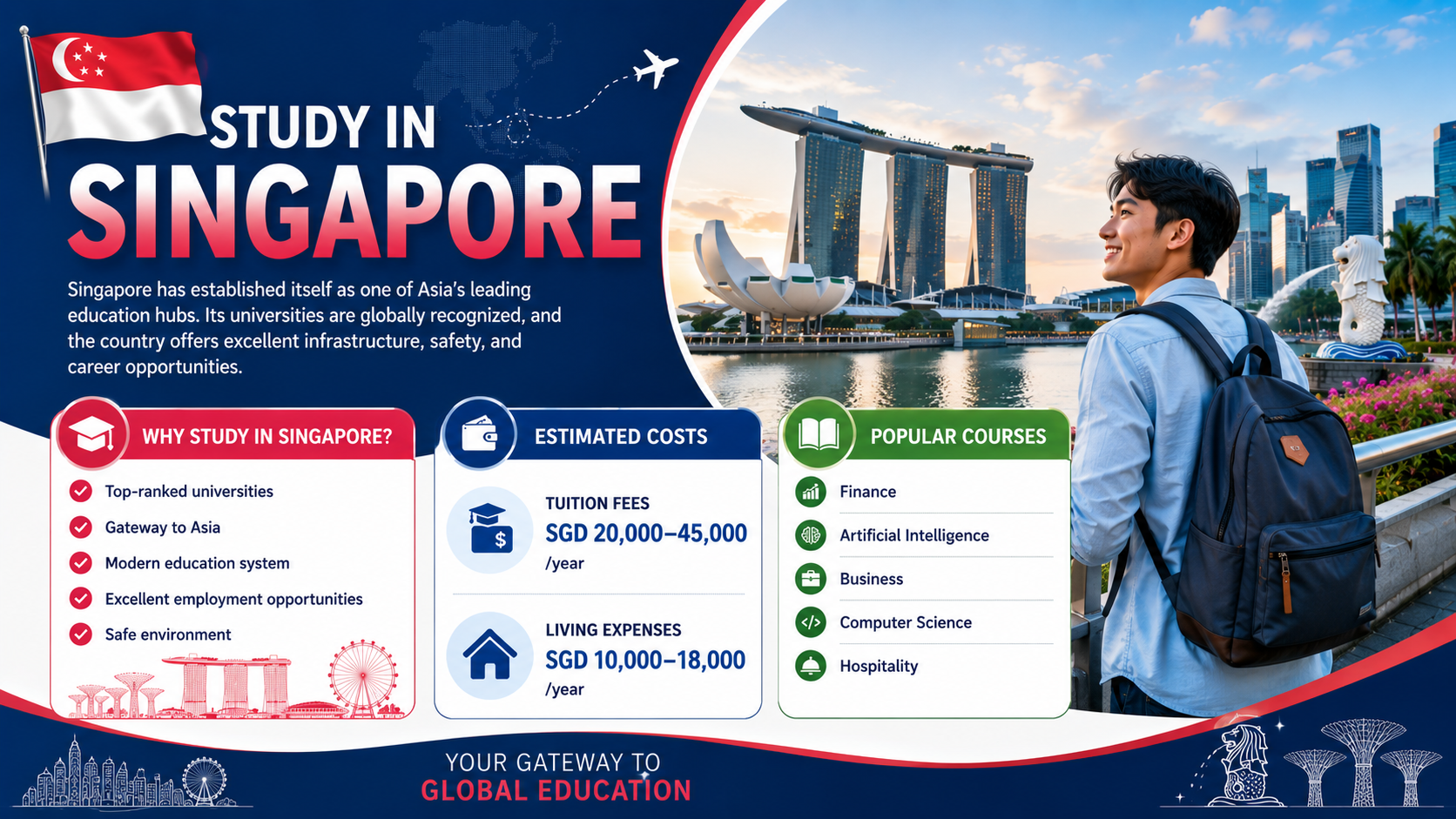
Singapore has established itself as one of Asia’s leading education hubs. Its universities are globally recognized, and the country offers excellent infrastructure, safety, and career opportunities.
Why Study in Singapore?
- Top-ranked universities
- Gateway to Asia
- Modern education system
- Excellent employment opportunities
- Safe environment
Estimated Costs
- Tuition Fees: SGD 20,000–45,000/year
- Living Expenses: SGD 10,000–18,000/year
Popular Courses
- Finance
- Artificial Intelligence
- Business
- Computer Science
- Hospitality
Which Country is Best for You?
| If You Want… | Best Country |
|---|---|
| Affordable Education | Germany |
| Best Immigration Pathway | Canada |
| Highest Graduate Salaries | USA |
| One-Year Master’s Degree | United Kingdom |
| Excellent Lifestyle | Australia |
| Technology Careers | Ireland |
| European Education | Netherlands |
| Luxury & Hospitality | France |
| Peaceful Student Life | New Zealand |
| Asian Business Hub | Singapore |
Common Mistakes Students Make When Choosing a Study Abroad Destination
Choosing the best countries to study abroad isn’t just about selecting a popular destination. Many students make decisions based on trends instead of research, which can lead to higher expenses or limited career opportunities.
1. Choosing a Country Only Because Friends Are Going
Your academic goals, budget, and career plans should determine your destination—not someone else’s choice.
2. Ignoring Total Living Expenses
Many students focus only on tuition fees and forget to calculate accommodation, food, transportation, insurance, and personal expenses.
3. Not Researching Job Opportunities
Before applying, check whether your chosen country has strong demand for graduates in your field.
4. Missing Scholarship Opportunities
Thousands of scholarships go unclaimed each year simply because students don’t apply or aren’t aware of them.
5. Applying Without Professional Guidance
Errors in university applications or student visa documentation can cause delays or even rejections. Working with an experienced study abroad consultant can simplify the entire process.
Why Choose Nexa Overseas?
Studying abroad is a life-changing decision, and having the right guidance can make all the difference. At Nexa Overseas, we help students turn their international education dreams into reality with personalized support at every stage.
Our Services
- Free Career Counselling
- Country & University Selection
- Course Selection Guidance
- Admission Assistance
- Scholarship Guidance
- Student Visa Documentation
- SOP & LOR Assistance
- Education Loan Guidance
- Accommodation Assistance
- Pre-Departure Support
Whether you want to study in Canada, Australia, the UK, USA, Germany, Ireland, France, New Zealand, Singapore, or the Netherlands, our experienced counselors provide personalized guidance based on your academic profile and career goals.
Useful Links
Final Thoughts
Selecting one of the best countries to study abroad depends on your academic interests, financial budget, preferred lifestyle, and long-term career goals.
If affordability is your priority, Germany is an excellent option. If you’re looking for immigration opportunities, Canada and Australia remain among the strongest choices. Students seeking world-renowned universities often prefer the USA or the UK, while Ireland, France, the Netherlands, Singapore, and New Zealand continue to attract international students with excellent education and growing career opportunities.
Before making your final decision, compare tuition fees, living expenses, scholarships, visa requirements, work opportunities, and post-study career prospects carefully.
Need expert advice? Nexa Overseas is here to guide you through every step—from choosing the right country and university to securing your student visa and preparing for your journey abroad.
FAQs
1. Which is the best country to study abroad in 2026?
Canada, Australia, the UK, the USA, Germany, Ireland, and New Zealand are among the best countries to study abroad in 2026 because they offer quality education, globally recognized universities, and excellent career opportunities.
2. Which country is the cheapest for international students?
Germany is one of the most affordable destinations, especially for students attending public universities where tuition fees are minimal.
3. Which country offers the easiest student visa?
Visa approval depends on your documentation and eligibility. Canada, Australia, and the UK have well-defined student visa processes for qualified applicants.
4. Can I work while studying abroad?
Yes. Most popular study destinations allow international students to work part-time during their studies, subject to visa regulations.
5. Which country offers the best post-study work permit?
Canada, Australia, New Zealand, and the UK provide attractive post-study work opportunities for eligible graduates.
6. Which country is best for permanent residency after graduation?
Canada and Australia are among the top choices for graduates planning to apply for permanent residency after gaining eligible work experience.
7. Do I need IELTS to study abroad?
Many universities accept IELTS, TOEFL, or PTE scores. Some institutions also offer admission without IELTS under specific conditions.
8. Which course has the highest salary abroad?
Artificial Intelligence, Computer Science, Cyber Security, Medicine, Data Science, Software Engineering, and MBA programs are among the highest-paying fields.
9. How much money do I need to study abroad?
The total cost depends on the country, university, and lifestyle. Students should budget for tuition fees, accommodation, food, insurance, transportation, and personal expenses.
10. Can I get scholarships to study abroad?
Yes. Many universities and governments offer scholarships based on academic merit, leadership, or financial need.
11. Which country is safest for Indian students?
Canada, Australia, New Zealand, Germany, and Ireland are widely recognized as safe and welcoming destinations for international students.
12. How do I choose the right country?
Compare tuition fees, living costs, career opportunities, visa policies, scholarships, and your long-term goals before making a decision.
13. Why should I choose Nexa Overseas?
Nexa Overseas provides expert counselling, university selection, admission support, scholarship guidance, visa assistance, and end-to-end support for students planning to study abroad.
14. When should I start my study abroad application?
It is recommended to begin your application process at least 8–12 months before your intended intake to allow enough time for admissions, visa processing, and financial planning.
15. How can I contact Nexa Overseas?
You can connect with our experienced study abroad advisors by visiting our Contact Us page and booking a free consultation.

Related Posts


Comments (0)