
Finding the right study abroad scholarships for Indian students can make international education much more…
Study in Canada for Indian Students: Complete Guide (2026)
Canada continues to be one of the most preferred destinations for higher education, especially for Indian students looking for globally recognised degrees, excellent career opportunities, and a high quality of life. Every year, thousands of students choose Canadian universities because of their academic excellence, multicultural environment, and strong post graduation employment prospects. As a result, study in Canada for Indian students remains one of the most searched education pathways in 2026.
However, studying in Canada involves much more than selecting a university. Students must choose the right course, meet admission requirements, prepare for language proficiency exams, arrange financial documents, apply for a study permit, and plan accommodation before departure. Therefore, having the right guidance can simplify every stage of the journey.
Nexa Overseas helps students navigate each step with practical advice and personalised support. From university and course selection to admission assistance, every process is carefully planned to improve the chances of securing admission at leading Canadian universities.
This complete guide explains everything about study in Canada for Indian students, including eligibility, tuition fees, scholarships, student visa requirements, living expenses, top universities, career opportunities, and practical tips for a successful application in 2026.
Why Study in Canada for Indian Students?
Canada has built an excellent reputation for offering world class education while maintaining affordable tuition fees compared to many other popular study destinations. Degrees earned from Canadian universities are recognised worldwide, making graduates highly competitive in the global job market.
In addition, the country provides a welcoming environment for international students. Cities such as Toronto, Vancouver, Montreal, Calgary, and Ottawa offer excellent public transport, healthcare facilities, and vibrant multicultural communities where Indian students can feel at home.
Moreover, Canada encourages innovation, research, and practical learning. Many universities collaborate with industry leaders, allowing students to gain valuable work experience before graduation. Consequently, graduates often secure employment soon after completing their studies.
Students planning to study abroad can also explore professional study abroad services to understand admission timelines, university options, and application requirements before starting the process.
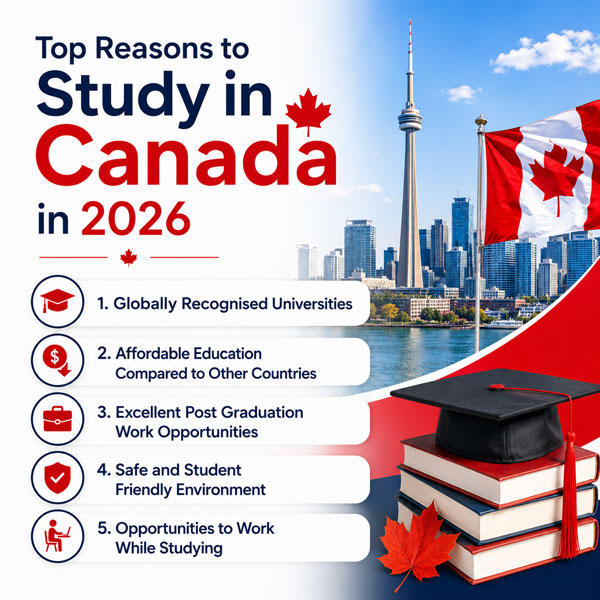
Top Reasons to Study in Canada in 2026
1. Globally Recognised Universities
Canadian universities consistently rank among the world’s best for teaching quality, research output, and student satisfaction. Employers across different industries value Canadian qualifications because they combine academic knowledge with practical skills.
Some of the highest ranked universities include:
- University of Toronto
- University of British Columbia
- McGill University
- University of Alberta
- McMaster University
- University of Waterloo
Choosing the right university depends on academic background, career goals, budget, and preferred location. Therefore, receiving professional guidance during university and course selection can help students make informed decisions.
2. Affordable Education Compared to Other Countries
Although studying abroad requires financial planning, Canada generally offers better value than several other popular destinations. Tuition fees remain competitive while maintaining exceptional education standards.
Average annual tuition fees vary depending on the program.
- Diploma programs: CAD 14,000 to CAD 22,000
- Bachelor’s degrees: CAD 18,000 to CAD 35,000
- Master’s degrees: CAD 20,000 to CAD 40,000
- MBA programs: CAD 35,000 to CAD 65,000
Additionally, several universities provide financial aid and merit based awards for international applicants. Students can also explore available funding options through scholarship support before submitting applications.
3. Excellent Post Graduation Work Opportunities
One of the biggest advantages of study in Canada for Indian students is the opportunity to gain valuable work experience after graduation.
Eligible graduates can apply for a Post Graduation Work Permit, commonly known as the PGWP. Depending on the course duration, graduates may receive a work permit valid for up to three years.
This experience helps students build professional networks, improve career prospects, and strengthen eligibility for long term immigration pathways.
- Gain Canadian work experience
- Improve employment opportunities
- Develop industry specific skills
- Build professional connections
- Increase eligibility for permanent residency programs
4. Safe and Student Friendly Environment
Safety remains a major factor when selecting a study destination. Fortunately, Canada consistently ranks among the safest countries in the world. Universities provide secure campuses, counselling services, healthcare facilities, and dedicated support teams for international students.
Furthermore, Canada’s multicultural society welcomes students from different countries and backgrounds. Indian students can easily find cultural associations, community groups, restaurants, and festivals that help create a comfortable living experience.
5. Opportunities to Work While Studying
International students enrolled in eligible institutions can work part time during academic sessions while continuing their studies. During scheduled breaks, many students become eligible for full time employment according to current immigration regulations.
Part time work allows students to gain professional experience, improve communication skills, and manage everyday living expenses. Nevertheless, academic performance should always remain the highest priority.
Before applying for a Canadian study permit, students should understand eligibility requirements and documentation through professional visa guidance to avoid unnecessary delays during the application process.
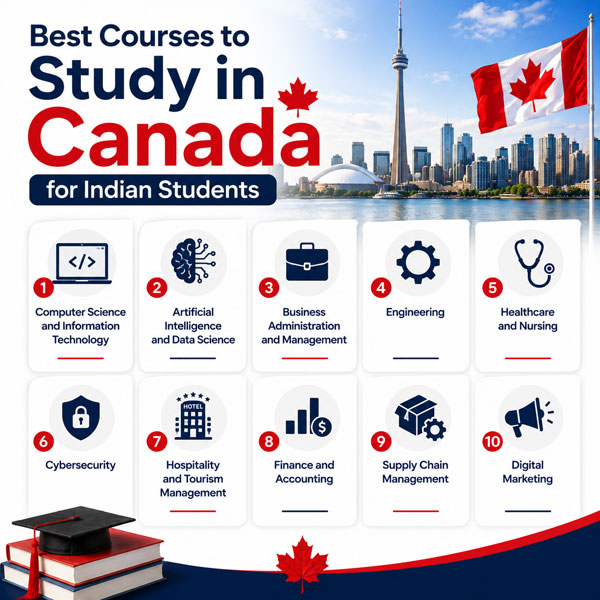
Best Courses to Study in Canada for Indian Students
Canada offers thousands of academic programs across various disciplines. However, selecting a course that aligns with career goals is equally important as choosing the right university.
Some of the most popular programs among Indian students include:
- Computer Science and Information Technology
- Artificial Intelligence and Data Science
- Business Administration and Management
- Engineering
- Healthcare and Nursing
- Cybersecurity
- Hospitality and Tourism Management
- Finance and Accounting
- Supply Chain Management
- Digital Marketing
Each course has different admission requirements, career opportunities, and tuition fees. Therefore, selecting the right program should always be based on academic qualifications, future career plans, and budget rather than popularity alone.
Eligibility Criteria to Study in Canada for Indian Students
Understanding the admission requirements is one of the most important steps before applying to Canadian universities. Although eligibility varies between institutions and courses, most universities follow similar academic and language requirements.
Preparing the necessary documents early can reduce delays during the admission process. Students who need help organising applications can benefit from professional admission assistance to ensure every document is submitted correctly.
Academic Requirements
- Completed Class 12 for undergraduate programs
- Bachelor’s degree from a recognised university for postgraduate programs
- Minimum academic percentage according to university requirements
- Valid passport
- Academic transcripts and certificates
English Language Proficiency Requirements
Most Canadian universities require proof of English language proficiency before granting admission. The required score depends on the university, course, and academic level.
Commonly accepted English language tests include:
- IELTS Academic
- TOEFL iBT
- PTE Academic
- Duolingo English Test (accepted by selected universities)
Students planning to take language proficiency exams can strengthen their preparation through professional exam preparation for IELTS, TOEFL, GRE, and GMAT.
Top Universities in Canada for Indian Students
Canada is home to several universities that consistently rank among the world’s best. These institutions offer excellent teaching standards, modern research facilities, and strong industry partnerships.
University of Toronto
The University of Toronto is one of Canada’s most prestigious institutions. It is well known for research, innovation, engineering, business, medicine, and computer science programs.
University of British Columbia
Located in Vancouver, the University of British Columbia offers outstanding academic programs while providing students with access to one of Canada’s most vibrant cities.
McGill University
McGill University attracts students from around the world because of its strong academic reputation, diverse campus, and internationally recognised degrees.
University of Waterloo
The University of Waterloo is especially popular among engineering and technology students because of its cooperative education programs that combine classroom learning with paid work experience.
University of Alberta
The University of Alberta offers excellent programs in engineering, healthcare, agriculture, business, and science while maintaining competitive tuition fees.
Cost of Study in Canada for Indian Students
Financial planning plays a significant role in every international education journey. Besides tuition fees, students should also consider accommodation, transportation, food, insurance, and daily living expenses.
Average Annual Tuition Fees
- Diploma Programs: CAD 14,000 to CAD 22,000
- Bachelor’s Degree: CAD 18,000 to CAD 35,000
- Master’s Degree: CAD 20,000 to CAD 40,000
- MBA Programs: CAD 35,000 to CAD 65,000
Average Monthly Living Expenses
- Accommodation: CAD 700 to CAD 1,800
- Food and Groceries: CAD 250 to CAD 500
- Transportation: CAD 80 to CAD 180
- Mobile and Internet: CAD 60 to CAD 120
- Health Insurance: As required by the province or institution
- Personal Expenses: CAD 150 to CAD 300
Actual expenses vary depending on the city, accommodation type, and personal lifestyle. Metropolitan cities usually have higher living costs than smaller towns.
Scholarships for Indian Students in Canada
Many Canadian universities and government organisations provide scholarships that help reduce tuition costs. Some awards recognise academic excellence, while others consider financial need, leadership, or research achievements.
Applying early significantly improves scholarship opportunities because many funding programs have limited seats and strict deadlines.
Students looking for financial assistance should also explore professional scholarship support before submitting university applications.
Popular Scholarships
- Vanier Canada Graduate Scholarships
- Lester B. Pearson International Scholarship
- University of British Columbia International Scholars Program
- University of Toronto Scholarships
- Ontario Graduate Scholarship
Canada Student Visa Process for Indian Students
Receiving a university admission letter is only one part of the journey. Students must also obtain a Canadian study permit before travelling.
The visa application requires careful preparation because missing or incorrect documents may delay processing. Therefore, many applicants seek professional visa guidance before submitting their applications.
Documents Required for a Canada Study Permit
- Valid passport
- Letter of Acceptance from a Designated Learning Institution
- Academic transcripts and certificates
- English language test score
- Proof of financial support
- Statement of Purpose
- Passport-size photographs
- Medical examination, if applicable
- Police clearance certificate, if required
Step by Step Canada Student Visa Process
- Select a recognised Canadian university and course.
- Receive the official Letter of Acceptance.
- Prepare all financial and academic documents.
- Apply online for the Canadian study permit.
- Complete biometric verification.
- Attend additional verification if requested.
- Receive the visa decision.
- Plan travel and accommodation before departure.
Submitting complete and accurate documentation can significantly improve the overall application process while reducing unnecessary delays.
Best Cities in Canada for Indian Students
Choosing the right city is just as important as selecting the right university. Every city offers different living costs, employment opportunities, weather conditions, and student experiences. Therefore, students should compare these factors before making a final decision.
Toronto, Ontario
Toronto remains one of the most popular destinations for study in Canada for Indian students. The city is home to internationally recognised universities, a diverse population, and countless employment opportunities. Although living expenses are higher than in many other Canadian cities, students benefit from excellent public transport, internships, and networking opportunities.
Vancouver, British Columbia
Vancouver offers breathtaking natural beauty along with world class education. The city attracts students interested in business, technology, healthcare, and environmental sciences. In addition, its pleasant climate makes it one of Canada’s most desirable places to live.
Montreal, Quebec
Montreal is known for affordable tuition fees, vibrant student life, and outstanding universities. Students interested in engineering, artificial intelligence, business, and design often choose Montreal because of its strong academic reputation.
Calgary, Alberta
Calgary combines affordable living costs with excellent career opportunities. The city has a growing economy and offers quality education in engineering, energy, finance, and healthcare.
Ottawa, Ontario
Canada’s capital city provides a safe environment, excellent research institutions, and numerous employment opportunities in government, technology, and business sectors. Students seeking a quieter academic environment often consider Ottawa an excellent option.
Popular Intakes in Canada
Canadian universities generally offer multiple admission intakes throughout the year. However, not every course is available in every intake. Planning early gives students a better chance of securing admission to their preferred university.
Fall Intake
The Fall intake usually begins in September and is the most popular admission season. Most universities offer the widest range of courses during this intake.
Winter Intake
The Winter intake generally starts in January. It is an excellent option for students who miss the Fall admission cycle or require additional preparation time.
Summer Intake
The Summer intake usually begins between May and June. Although fewer programs are available, some universities offer diploma, certificate, and specialised courses during this period.
Students should begin planning at least 10 to 12 months before their preferred intake. Proper planning provides enough time for university applications, entrance exams, financial preparation, and visa processing. Helpful planning resources are also available through the Nexa Overseas Blog.
How to Apply to Canadian Universities
The admission process becomes much easier when each step is completed in the correct order. Careful preparation reduces mistakes and improves the likelihood of receiving admission offers.
- Research universities that match academic and career goals.
- Select the most suitable course.
- Check eligibility requirements.
- Prepare IELTS, TOEFL, or PTE scores if required.
- Collect academic transcripts and supporting documents.
- Prepare an effective Statement of Purpose.
- Submit university applications before deadlines.
- Receive the admission offer.
- Accept the offer and pay the required deposit.
- Apply for the Canadian study permit.
Professional guidance during application and admission assistance can help students avoid documentation errors and missed deadlines.
Documents Required for University Admission
Universities may request additional documents depending on the selected program. Nevertheless, the following documents are commonly required.
- Valid passport
- Class 10 and Class 12 mark sheets
- Bachelor’s degree certificates for postgraduate applicants
- Official academic transcripts
- IELTS, TOEFL, or PTE scorecard
- Statement of Purpose
- Letters of Recommendation
- Updated resume for postgraduate courses
- Portfolio for design or architecture programs
- Passport-size photographs
Career Opportunities After Studying in Canada
One of the strongest reasons behind the popularity of study in Canada for Indian students is the country’s growing demand for skilled professionals. Graduates from Canadian institutions often find excellent employment opportunities across different industries.
Information Technology
- Software Developer
- Data Analyst
- Artificial Intelligence Engineer
- Cloud Computing Specialist
- Cybersecurity Analyst
Engineering
- Civil Engineer
- Mechanical Engineer
- Electrical Engineer
- Construction Project Manager
Healthcare
- Registered Nurse
- Healthcare Administrator
- Medical Laboratory Technologist
- Public Health Professional
Business and Finance
- Financial Analyst
- Business Consultant
- Marketing Manager
- Supply Chain Manager
Graduates with relevant work experience and strong professional skills often enjoy competitive salaries and long term career growth across Canada.

Can Indian Students Get Permanent Residency in Canada?
Many students choose Canada because it offers several immigration pathways after graduation. Although permanent residency is not automatic, Canadian education and work experience can strengthen eligibility under various immigration programs.
Graduates commonly begin by obtaining a Post Graduation Work Permit. After gaining eligible Canadian work experience, they may qualify for immigration pathways such as Express Entry or Provincial Nominee Programs, depending on current government regulations.
Since immigration policies may change over time, students should always rely on updated information and seek professional advice before making long term plans. Students can also learn more about available support by visiting the About Nexa Overseas page.
Common Mistakes to Avoid When Planning to Study in Canada
Many students make avoidable mistakes during the application process. Careful planning and timely preparation can improve admission and visa approval chances.
- Applying after university deadlines have passed.
- Selecting a course without considering long term career goals.
- Submitting incomplete or incorrect documents.
- Ignoring English language test requirements.
- Not planning finances before applying.
- Writing a weak Statement of Purpose.
- Applying for a visa without proper document verification.
- Waiting until the last minute to arrange accommodation.
Starting early allows enough time to prepare documents, compare universities, apply for scholarships, and complete the visa process without unnecessary stress.
Why Choose Nexa Overseas?
Applying to universities in another country involves several important decisions. Choosing the right university, preparing applications, arranging financial documents, and applying for a student visa all require careful planning.
Nexa Overseas supports students throughout every stage of the process. From selecting suitable universities to preparing visa documentation, every service is designed to make the journey more organised and straightforward.
Students can receive guidance for university and course selection, exam preparation, admission assistance, visa guidance, and personalised consultation based on individual academic goals.
Conclusion
Study in Canada for Indian students continues to be one of the best choices for higher education in 2026. Canadian universities provide internationally recognised degrees, outstanding research opportunities, practical learning, and excellent career prospects after graduation. In addition, students benefit from a safe environment, multicultural communities, and opportunities to gain valuable work experience.
Success begins with careful planning. Selecting the right course, preparing strong applications, meeting admission requirements, and completing the visa process on time can make a significant difference. Taking each step with proper guidance also helps reduce common mistakes during the application journey.
Students planning to begin their Canadian education journey can contact Nexa Overseas for professional guidance tailored to individual academic goals. Schedule a free consultation to explore suitable universities, understand admission requirements, and confidently prepare for studying in Canada.
Frequently Asked Questions
1. Is Canada a good country for Indian students in 2026?
Yes. Canada remains one of the leading study destinations because of its excellent universities, globally recognised degrees, post graduation work opportunities, and welcoming environment for international students.
2. How much does it cost to study in Canada for Indian students?
Tuition fees generally range from CAD 14,000 to CAD 40,000 per year, depending on the university and course. Living expenses vary by city and lifestyle.
3. Which English language tests are accepted by Canadian universities?
Most universities accept IELTS Academic, TOEFL iBT, and PTE Academic. Some institutions also accept the Duolingo English Test for selected programs.
4. Can Indian students work while studying in Canada?
Yes. Eligible international students may work part time during academic sessions and full time during scheduled academic breaks, subject to current Canadian immigration regulations.
5. What are the best courses to study in Canada?
Popular courses include Computer Science, Artificial Intelligence, Engineering, Business Administration, Healthcare, Cybersecurity, Finance, Data Science, Hospitality, and Supply Chain Management.
6. How long does the Canada student visa process take?
Processing times vary throughout the year. Applying well before the intended intake and submitting complete documentation can help avoid unnecessary delays.
7. Can Indian students get scholarships in Canada?
Yes. Many universities and government organisations offer merit based and need based scholarships to eligible international students. Applying early usually improves the chances of receiving financial assistance.
8. Is IELTS compulsory for studying in Canada?
Not always. While many universities require IELTS, several institutions also accept TOEFL, PTE Academic, or other approved English language tests. Admission requirements differ between universities.
9. Can students stay in Canada after graduation?
Many graduates qualify for a Post Graduation Work Permit, which allows eligible students to gain Canadian work experience. This experience may also support future immigration applications under eligible programs.
10. How can Nexa Overseas help with studying in Canada?
Nexa Overseas assists students with university selection, exam preparation, admission applications, scholarship guidance, visa documentation, and personalised counselling throughout the study abroad process.

Related Posts


Comments (0)