

Finding the right study abroad scholarships for Indian students can make international education much more…
Study in Germany for Indian Students: Eligibility, Costs, Universities and Student Visa Guide 2026
Planning to study in Germany can be a smart option for Indian students who want a recognised international degree without the high tuition costs found in some other countries. Germany has a wide range of public and private universities, strong technical programmes, and courses taught in both English and German.
However, choosing a course is only the beginning. You also need to understand university eligibility, application deadlines, tuition fees, living expenses, financial proof, health insurance and the Germany student visa process. This guide explains the main steps, so you know what to prepare before applying.
If you are still comparing countries or are unsure which study destination suits your academic background, you can explore university and course selection support from Nexa Overseas before making your final decision.

Why Study in Germany for Indian Students?
Germany attracts students from India for several practical reasons. Many public universities offer Bachelor’s and Master’s programmes with no general tuition fee, although students normally have to pay a semester contribution. There are also exceptions, so checking the fee structure of the specific university and state is important.
For example, Baden-Württemberg charges tuition fees to many non-EU students, while some universities in Bavaria may also charge tuition fees. Private universities generally have higher fees than public institutions. The German Academic Exchange Service, or DAAD, recommends checking the costs for the specific university and programme rather than assuming that every German university is tuition-free.
Germany is also known for programmes in engineering, computer science, business, data science, management, natural sciences and other technical fields. The right choice, however, depends on your previous qualification, career plans, academic results and the admission requirements of the course.
Eligibility to Study in Germany
There is no single eligibility rule for every German university. Each university and programme can set its own admission requirements. Your academic qualification must first give you access to higher education in Germany.
For international qualifications, uni-assist’s university admission check can help applicants understand whether their educational certificate meets the general requirements for higher education in Germany. The final admission decision still belongs to the university.
Academic Requirements
For a Bachelor’s degree, universities normally assess your school qualification and whether it provides the required university entrance qualification. Depending on your educational background, you may need additional preparation before starting a degree in Germany.
For a Master’s degree, you generally need a relevant Bachelor’s degree. The university may also check your subjects, grades, credit points and previous academic coursework. Some programmes have specific prerequisites, so do not rely only on the general eligibility information shown on a university website.
English or German Language Requirements
The language requirement depends on the course. English-taught programmes may ask for proof of English proficiency through tests such as IELTS or TOEFL. German-taught programmes normally require recognised German language proficiency.
Some programmes may also have a minimum language level or additional requirements. Therefore, check the exact course page before booking an examination.
Nexa Overseas can also help students plan their IELTS, TOEFL, GRE or GMAT preparation according to the requirements of their chosen programme.

How to Choose German Universities
Do not choose a university simply because its name appears frequently online. Start with the course. Look at the curriculum, specialisations, admission criteria, language, location, tuition structure and career relevance.
Also check whether the university accepts applications directly or through uni-assist. uni-assist processes international applications for many German universities and provides a six-step application process covering information gathering, planning, document preparation, online application, payment and tracking.
When shortlisting universities, keep three categories in your plan:
- Universities where your academic profile is a strong match
- Universities where the admission requirements are realistic but competitive
- Universities with alternative programmes that match your career plans
This approach gives you a practical application plan instead of relying on one university.
Popular Study Options in Germany
Indian students consider Germany for a wide range of subjects. Some commonly selected areas include:
- Computer Science and Information Technology
- Engineering
- Data Science and Artificial Intelligence
- Business and Management
- Finance and Economics
- Mechanical and Automotive Engineering
- Electrical and Electronics Engineering
- Natural Sciences
Popularity should not be the deciding factor. A course that looks attractive online may not match your previous education or long-term career plans. Always compare the curriculum and entry requirements before submitting an application.
If you need help preparing your university shortlist, Nexa Overseas provides application and admission assistance for students planning their overseas education.
Documents Needed for University Applications
Start preparing your documents well before the application deadline. The exact list varies by university and course, but applicants may need academic certificates, mark sheets, passport details, language test results, a CV, statement of purpose and other course-specific documents.
If the application is handled through uni-assist, its official process explains how applicants should prepare documents, apply online and track their application.
Keep digital copies of your documents organised. Check whether translations, certified copies or specific document formats are required before uploading anything.
For a complete document review and application plan, you can also contact Nexa Overseas study abroad services.
Cost of Studying in Germany for Indian Students
The cost of studying in Germany depends on the university, course, location and type of institution you choose. Public universities are often more affordable than private universities, but you should still plan for semester contributions, accommodation, food, transport, health insurance and other daily expenses.
Do not make your budget based only on tuition fees. Your monthly living costs can make a significant difference, especially if you study in a major city such as Munich, Frankfurt or Berlin.
Tuition Fees in Germany
Many public universities in Germany do not charge general tuition fees for undergraduate and many postgraduate programmes. However, students usually pay a semester contribution. This amount can cover services such as student administration, student facilities and, depending on the university and region, public transport.
There are exceptions. For example, international students from outside the European Union may have to pay tuition fees at certain universities or in specific German states. Private universities also normally charge tuition fees.
Therefore, always check the official fee information for your selected programme before calculating your total study budget.
Living Expenses in Germany
Accommodation is usually one of the largest expenses for an international student. The amount you spend can vary considerably depending on the city and type of accommodation.
A student living in a smaller university town may have different monthly expenses from someone renting accommodation in a major city. Food, transport, phone bills, study materials and personal expenses should also be included in your budget.
A realistic financial plan should include:
- Accommodation and utilities
- Food and groceries
- Health insurance
- Local transportation
- Study materials
- Mobile phone and internet
- Personal expenses
- Emergency savings
Planning these expenses before leaving India can prevent financial pressure after you arrive in Germany.
Blocked Account Requirement for Germany Student Visa
Financial proof is an important part of the Germany student visa process. Students generally need to demonstrate that they have sufficient funds to support themselves during their stay in Germany.
For 2026, the required amount for a blocked account for students is €11,904, which corresponds to €992 per month. The exact financial proof accepted by the German authorities can depend on your individual circumstances, so always check the latest requirements before submitting your visa application.
A blocked account is designed to show that money is available for your living expenses in Germany. The funds are subject to monthly withdrawal limits rather than being freely accessible as one large amount.
Financial planning should begin well before your visa appointment. Waiting until the last stage to arrange your financial documents can create unnecessary delays.
Other Ways to Show Financial Proof
A blocked account is not the only possible form of financial proof in every situation. Depending on your circumstances, other accepted options may include a scholarship or a formal declaration of financial support.
Because visa requirements can change, students should check the official German mission or Foreign Office information applicable to their application before relying on a particular document.
If you are unsure about your financial documents or visa paperwork, Nexa Overseas visa guidance can help you understand the documents required for your application.
Scholarships to Study in Germany
Scholarships can reduce the financial burden of studying abroad. Germany has several scholarship opportunities for international students, although eligibility varies by programme, university, academic level and scholarship provider.
The DAAD scholarship database is one useful starting point for finding funding opportunities for international students. You should check each scholarship’s academic requirements, application deadline, funding details and eligibility conditions before applying.
Some scholarships may consider academic performance, research experience, professional background or the specific course you plan to study. Others are designed for particular fields or levels of study.
How to Improve Your Scholarship Application
Start early. Scholarship deadlines may not match university admission deadlines, so waiting for your university offer before researching funding can limit your options.
Prepare your academic records, CV, motivation letter and other supporting documents in advance. Your application should explain why you selected the programme and how it fits your academic or professional plans.
Nexa Overseas also provides scholarship support for students looking for suitable funding opportunities and assistance with the application process.
Germany Student Visa Requirements for Indian Students
Once you receive admission to a German university or have the required confirmation for your study plan, the next major step is the student visa application.
Students planning to stay in Germany for more than 90 days generally need a National Visa for their studies. The application process requires supporting documents and proof that you meet the conditions for studying and staying in Germany.
The exact document list can vary according to your circumstances and the German mission handling your application. Therefore, check the current requirements before your appointment.
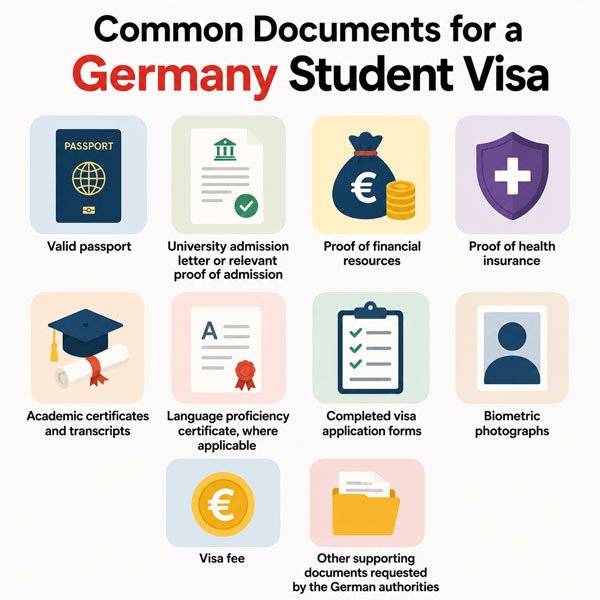
Common Documents for a Germany Student Visa
Depending on your case, you may need documents such as:
- Valid passport
- University admission letter or relevant proof of admission
- Proof of financial resources
- Proof of health insurance
- Academic certificates and transcripts
- Language proficiency certificate, where applicable
- Completed visa application forms
- Biometric photographs
- Visa fee
- Other supporting documents requested by the German authorities
Do not assume that submitting more documents automatically makes an application stronger. The important point is to provide the documents requested by the relevant German authority in the required format.
Germany Student Visa Process: Step-by-Step
The visa process can feel complicated when you look at it as one large task. It becomes easier when you break it into smaller steps.
Step 1: Receive Your University Admission
Start by securing admission to an eligible German university or programme. Keep your admission letter and other university documents safely because they may be required during the visa process.
Step 2: Arrange Financial Proof
Prepare the required proof of funds before your visa appointment. If you are using a blocked account, make sure the required amount has been arranged according to the current rules.
Step 3: Arrange Health Insurance
Health insurance is an important requirement for international students in Germany. Arrange suitable coverage according to the requirements applicable to your study and visa situation.
Step 4: Prepare the Visa Documents
Check every document against the latest official checklist. Make sure your passport, admission documents, financial proof, insurance documents and academic records are complete and consistent.
Step 5: Attend the Visa Appointment
At the appointment, you may need to provide your documents, biometric information and answers about your study plans. You should understand your university, course, financial arrangements and reasons for choosing Germany.
Step 6: Wait for the Decision
Visa processing times can vary. Avoid making non-refundable travel arrangements until your visa has been approved unless you have a specific reason to do so.
Good preparation matters at every stage. Nexa Overseas can provide visa guidance and help you prepare for the documentation and interview stages of your application.
Germany Student Visa Timeline for Indian Students
The Germany student visa timeline can vary from one applicant to another. Processing time depends on factors such as the visa office, completeness of your documents, verification requirements and the volume of applications being handled.
For this reason, it is better to start your visa preparation as soon as you have the documents needed for your application. Do not leave financial proof, insurance or document preparation until the last few days.
When Should You Start Your Visa Preparation?
A practical approach is to begin preparing your documents several weeks before your planned visa appointment. Your university admission, financial proof, insurance and other supporting documents should be ready before you submit the application.
Keep enough time for corrections. If a document has an error or an additional document is requested, you should have time to arrange it without affecting your study plans.
Germany University Intakes for Indian Students
German universities generally have two major admission periods. The exact intake dates depend on the university and programme, so always check the official course page before planning your application.
Winter Intake
The winter semester is the main intake for many German universities. Applications for programmes beginning in the winter semester are often submitted several months before the semester starts.
However, deadlines are not identical across universities. Some courses may close applications earlier, while others may have different deadlines for international applicants.
Summer Intake
The summer semester provides another opportunity to start selected programmes. However, fewer courses may be available compared with the winter intake.
If your preferred programme is not available for the summer semester, waiting for the next winter intake may be necessary. This is why checking course availability early can save time.
Can Indian Students Work While Studying in Germany?
International students can work in Germany under specific legal conditions. The rules determine how much work a student can undertake during the year.
Before accepting a job, check the current regulations that apply to your residence status. Your primary purpose in Germany should remain your education, and your work arrangements should not interfere with your studies.
Part-time work can help with some everyday expenses, but it should not be the foundation of your financial plan. You should have sufficient funds arranged before travelling to Germany.
Accommodation for Indian Students in Germany
Finding accommodation is another important part of preparing for your move. Students may consider university accommodation, student residences, shared apartments or private rentals.
Availability can be limited in popular university cities. Therefore, start looking for accommodation soon after receiving your admission decision.
When comparing accommodation, check the monthly rent, deposit, utilities, location, public transport connections and contract terms. A cheaper room located far from your university may also increase your daily travel costs.
Health Insurance for Students in Germany
Health insurance is an important requirement for international students in Germany. Your insurance arrangement should meet the requirements applicable to your student status and visa application.
Do not wait until the final stage to research insurance. Confirm which type of coverage your university and visa application require before making your arrangements.
What Happens After You Receive Your Germany Student Visa?
Getting the visa is an important milestone, but your preparation does not end there. You still need to organise several practical matters before and after arriving in Germany.
Before travelling, keep your important documents together. Your passport, visa, university admission documents, accommodation details, insurance information and financial documents should be easily accessible.
After arriving in Germany, you may need to complete local registration and other formalities related to your residence and university. Your university’s international office can guide the procedures that apply to students at that institution.
You should also plan your travel and accommodation well in advance. Nexa Overseas provides study abroad services that can support students through different stages of their overseas education planning.
Common Mistakes Indian Students Make When Applying to Germany
Avoiding simple mistakes can make the application process much easier. Many problems happen because students rush through documents or select a course without checking the detailed requirements.
Choosing a Course Without Checking Eligibility
Do not assume that having a Bachelor’s degree automatically makes you eligible for every Master’s programme. Universities may require specific subjects, credit points, grades or previous coursework.
Ignoring Application Deadlines
Application deadlines can vary between universities and programmes. Missing a deadline may mean waiting for the next intake.
Create a simple deadline list containing the university, course, application method, document requirements and final submission date.
Using Outdated Visa Information
Visa requirements and financial amounts can change. Information found in an old blog or social media post may no longer apply.
Always verify important visa information through the official German authorities before submitting your application.
Underestimating Living Costs
Tuition fees are only one part of your study budget. Rent, food, insurance, transportation and other expenses can add up quickly.
Prepare a monthly budget before you travel. It will give you a much clearer idea of how much money you need during your studies.
Leaving Visa Preparation Until the Last Minute
University admission and visa preparation should be planned together. Once you know your intended intake, create a timeline covering university applications, financial documents, insurance, visa preparation and travel arrangements.
How Nexa Overseas Can Help With Your Germany Study Plan
Studying in Germany involves several separate steps, and missing one requirement can affect the rest of your application. A structured plan can make the process easier to manage.
Nexa Overseas can assist with university and course selection, application preparation, exam planning, scholarship support and visa guidance. The aim is to help you understand what needs to be done at each stage rather than leaving you to figure everything out at the last moment.
You can also visit the Nexa Overseas blog for more study abroad information, application guidance and visa-related resources.
Germany Study Checklist for Indian Students
Before you move forward with your application, use this checklist to review your preparation:
- Choose a suitable course and university
- Check the academic eligibility requirements
- Check English or German language requirements
- Note the university application deadline
- Prepare academic and personal documents
- Complete IELTS, TOEFL or other required examinations
- Apply to the selected universities
- Arrange financial proof
- Arrange suitable health insurance
- Prepare the Germany student visa application
- Plan accommodation and travel
- Keep copies of important documents
Having this checklist ready can help you track your progress and identify missing steps before they become a problem.
Frequently Asked Questions About Studying in Germany
1. Is Germany a good study destination for Indian students?
Yes. Germany offers a wide range of recognised universities and programmes, including many affordable public university options. However, students should compare course requirements, tuition fees, living costs and career plans before choosing a university.
2. How much money is required to study in Germany?
The amount depends on your university, city, accommodation and personal expenses. For the 2026 student visa financial requirement, students generally need to show funds of €11,904 through an accepted form of financial proof, such as a blocked account, subject to the applicable rules.
3. Is IELTS required to study in Germany?
IELTS may be required for programmes taught in English, but the exact requirement depends on the university and course. Some institutions may accept TOEFL or another recognised English language qualification.
4. Can I study in Germany without knowing German?
Yes, if you choose a programme taught in English and meet its language requirements. However, learning basic German can make everyday activities such as shopping, travelling and communicating easier after you arrive.
5. Are German public universities free for Indian students?
Many public universities do not charge general tuition fees for many programmes. However, students normally pay a semester contribution, and certain universities or German states may charge tuition fees to students from outside the European Union. Always check the fee structure of your chosen programme.
6. What is a blocked account for Germany?
A blocked account is one method of providing financial proof for a German student visa. Money is deposited into the account before the student travels, and withdrawals are subject to the applicable monthly limit.
7. What documents are required for a Germany student visa?
Common documents can include a valid passport, university admission proof, financial documents, health insurance, academic records, language certificates where required, photographs, application forms and other supporting documents. The exact requirements depend on your circumstances and the responsible German mission.
8. How long does the Germany student visa process take?
There is no single processing time that applies to every application. Processing can depend on the visa office, document verification, application volume and individual circumstances. Students should therefore apply as early as possible after completing the required preparations.
9. Can international students work while studying in Germany?
International students can work under the conditions attached to their residence status. However, employment should not interfere with your studies. You should also have adequate financial resources before travelling instead of depending entirely on part-time income.
10. When should I start preparing to study in Germany?
Start several months before your intended intake. University selection, entrance requirements, language tests, documents, applications, financial arrangements and visa preparation all take time. Starting early also gives you more time to correct mistakes if a document or application needs attention.
Final Thoughts on Studying in Germany in 2026
Studying in Germany can be a practical choice for Indian students looking for internationally recognised education and a range of academic options. Still, the process requires careful planning. University eligibility, course selection, application deadlines, finances and visa requirements all need attention.
Do not choose a university only because someone else recommends it. Look at the course structure, admission requirements, location, total cost and how the programme fits your career plans.
Visa preparation deserves the same attention. Keep your financial documents, admission documents, insurance and other paperwork organised, and check current requirements before submitting your application.
If you are planning to study in Germany but are unsure where to begin, contact Nexa Overseas for guidance on your study abroad plan. A consultation can help you understand your options and decide what to work on first.
Plan Your Germany Study Journey With Nexa Overseas
From choosing a suitable course to preparing your university application and understanding the visa process, each stage needs a clear plan. Nexa Overseas helps students with university and course selection, exam preparation, admission assistance, scholarship support and visa guidance.
If Germany is on your list of study destinations, you can start by discussing your academic background, preferred course and plans with the Nexa Overseas team. The right preparation can make the process much easier to manage.
Book a consultation with Nexa Overseas and take the first step towards planning your studies in Germany.

Related Posts


Comments (0)