
Finding the right study abroad scholarships for Indian students can make international education much more…
Cost of Studying Abroad from India in 2026: Country-Wise Comparison
Planning the cost of studying abroad from India in 2026 starts long before submitting a university application. Tuition fees are important, but they are only one part of the total expense. Students must also consider accommodation, food, health insurance, visa charges, travel costs, and daily living expenses. Therefore, understanding the complete financial picture helps avoid unexpected surprises after reaching the destination.
Every study destination offers something different. Germany is known for affordable public universities, while Canada attracts students with excellent post graduation work opportunities. Similarly, Australia and the United Kingdom provide globally recognised degrees, although the overall cost is usually higher. As a result, comparing countries before applying makes it easier to choose an option that matches both academic goals and financial plans.
Students who need personalised guidance can explore the services offered by Nexa Overseas. Professional counselling helps students compare universities, estimate education costs, understand admission requirements, and build a practical budget before beginning the application process.
This guide explains the cost of studying abroad from India in 2026 through a detailed country wise comparison. It also covers tuition fees, living expenses, student visa costs, health insurance, scholarships, and practical budgeting tips for Indian students planning higher education overseas.
Why Comparing Study Abroad Costs Is Important
Many students choose a country after looking only at university tuition fees. However, tuition represents just one part of the total investment. Rent, groceries, transportation, medical insurance, books, and personal expenses often add a significant amount to the yearly budget. Consequently, comparing the overall cost helps students prepare financially before leaving India.
Financial planning also reduces unnecessary stress during the admission process. Students who understand the expected expenses can shortlist universities with greater confidence. Moreover, early budgeting creates enough time to arrange education loans, apply for scholarships, and collect financial documents required for visa applications.
Choosing the right destination also depends on career opportunities after graduation. Therefore, comparing tuition fees together with living expenses, work opportunities, and return on investment leads to a smarter decision. Students looking for personalised advice can also explore university and course selection to identify universities that match their academic profile and budget.
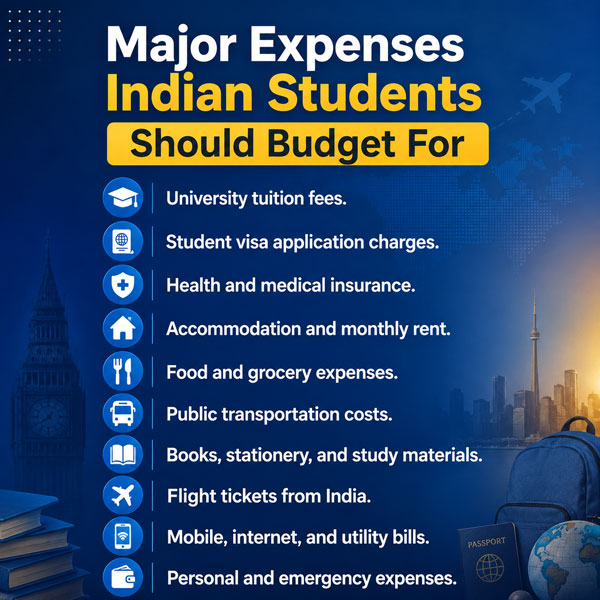
Major Expenses Indian Students Should Budget For
Preparing a realistic budget involves much more than calculating tuition fees. Every country has a different cost of living, and expenses can vary between cities as well. For example, living in London usually costs more than living in Manchester, while Toronto is generally more expensive than smaller Canadian cities.
Students should calculate every major expense before accepting an admission offer. Doing so helps avoid financial pressure during the course and makes long term planning much easier.
- University tuition fees.
- Student visa application charges.
- Health and medical insurance.
- Accommodation and monthly rent.
- Food and grocery expenses.
- Public transportation costs.
- Books, stationery, and study materials.
- Flight tickets from India.
- Mobile, internet, and utility bills.
- Personal and emergency expenses.
Although these expenses may seem overwhelming at first, careful planning can make overseas education much more manageable. In addition, many universities offer financial assistance based on academic performance. Students interested in reducing overall education costs can also explore scholarship support before submitting university applications.
Country Wise Comparison of Study Abroad Costs in 2026
The cost of studying abroad from India in 2026 varies from one country to another. Tuition fees, accommodation, transportation, healthcare, and daily expenses all influence the final budget. Therefore, comparing the complete annual cost before applying helps students make a practical financial decision.
Moreover, every destination offers different benefits. Some countries provide affordable tuition fees, while others offer better scholarship opportunities or stronger employment prospects after graduation. Consequently, students should compare both education quality and total expenses before choosing a university.
The estimates below provide an overview of the average yearly expenses for international students. However, the actual amount may differ depending on the university, programme, city, and personal lifestyle.
| Country | Average Tuition Fees (Per Year) | Average Living Expenses (Per Year) | Total Estimated Annual Cost |
|---|---|---|---|
| Canada | CAD 18,000 to CAD 35,000 | CAD 12,000 to CAD 18,000 | CAD 30,000 to CAD 53,000 |
| Australia | AUD 22,000 to AUD 45,000 | AUD 21,000 to AUD 29,000 | AUD 43,000 to AUD 74,000 |
| United Kingdom | GBP 15,000 to GBP 32,000 | GBP 10,000 to GBP 16,000 | GBP 25,000 to GBP 48,000 |
| Germany | EUR 250 to EUR 6,000 | EUR 11,000 to EUR 14,000 | EUR 11,250 to EUR 20,000 |
| United States | USD 25,000 to USD 55,000 | USD 14,000 to USD 22,000 | USD 39,000 to USD 77,000 |
| Ireland | EUR 12,000 to EUR 30,000 | EUR 10,000 to EUR 15,000 | EUR 22,000 to EUR 45,000 |
Tuition fees often receive the most attention. However, the cost of living can vary significantly between cities. For example, London, Sydney, Toronto, and New York usually require a higher monthly budget than smaller student cities.
Therefore, selecting the right university location can reduce the overall cost without affecting the quality of education. In addition, students should estimate accommodation, transport, and food expenses before making a final decision.
Preparing documents well before university deadlines is equally important. Furthermore, accurate applications reduce the chances of unnecessary delays. Students who require support throughout the application process can benefit from admission assistance to complete applications accurately and on time.
Cost of Studying in Canada from India in 2026
Canada remains one of the most preferred destinations for Indian students because of its globally recognised universities, multicultural environment, and strong career opportunities after graduation. In addition, the country offers an excellent education system with a wide range of programmes across different disciplines.
The overall expense depends on the university, course, and city. Nevertheless, Canada continues to provide excellent value for students seeking quality education and practical international work experience.
Average Annual Expenses in Canada
- Tuition Fees: CAD 18,000 to CAD 35,000
- Accommodation: CAD 8,000 to CAD 14,000
- Food and Groceries: CAD 3,000 to CAD 5,000
- Transportation: CAD 1,000 to CAD 1,800
- Health Insurance: CAD 600 to CAD 1,200
- Books and Study Materials: CAD 800 to CAD 1,500
- Personal Expenses: CAD 1,500 to CAD 3,000
Students should also budget for visa fees, biometric charges, and the Guaranteed Investment Certificate where applicable. Additionally, flight tickets and initial settlement expenses should be included while planning the overall budget.
Many Canadian universities also offer merit based scholarships that reduce tuition costs for eligible students. Therefore, researching scholarship opportunities before applying can result in significant savings.
Students should also prepare for English language proficiency tests before admission deadlines. Likewise, early preparation improves university application timelines. Professional exam preparation helps students prepare for IELTS, TOEFL, GRE, and GMAT with structured guidance and timely support.
Cost of Studying in Australia from India in 2026
Australia continues to rank among the top destinations for Indian students because of its world class universities, industry focused education, and excellent post study work opportunities. In addition, graduates benefit from qualifications that are recognised across the globe. Consequently, Australia remains a preferred choice for students planning long term international careers.
The overall cost depends on the university, programme, and city. Sydney and Melbourne usually have higher living expenses than Adelaide, Perth, or Hobart. Therefore, comparing cities before applying can make a noticeable difference to the total education budget.
Average Annual Expenses in Australia
- Tuition Fees: AUD 22,000 to AUD 45,000
- Accommodation: AUD 12,000 to AUD 18,000
- Food and Groceries: AUD 4,000 to AUD 6,000
- Transportation: AUD 1,200 to AUD 2,000
- Health Insurance (OSHC): AUD 600 to AUD 900
- Books and Study Materials: AUD 800 to AUD 1,500
- Personal Expenses: AUD 2,000 to AUD 4,000
Students should also consider visa application charges and travel expenses while preparing their financial plan. Moreover, arranging funds early helps avoid unnecessary delays during the visa process.
Several Australian universities also provide merit based scholarships for international students. Therefore, checking scholarship eligibility before submitting applications can reduce overall tuition costs. Students searching for funding opportunities can explore scholarship support to identify suitable financial aid options.
Popular Courses in Australia
- Engineering
- Information Technology
- Business and Management
- Nursing
- Public Health
- Data Science
- Cyber Security
- Hospitality Management
Choosing the right university is just as important as selecting the right course. Therefore, comparing rankings, tuition fees, internships, and graduate outcomes before applying can lead to a better return on investment.
Cost of Studying in the United Kingdom from India in 2026
The United Kingdom remains a popular destination because of its prestigious universities, shorter master’s programmes, and internationally recognised qualifications. Furthermore, many universities maintain strong connections with global employers, creating valuable career opportunities after graduation.
Although tuition fees can be higher than in some European countries, one year postgraduate programmes often reduce the overall education cost. Consequently, many Indian students find the United Kingdom to be a practical option despite the higher annual expenses.
Average Annual Expenses in the United Kingdom
- Tuition Fees: GBP 15,000 to GBP 32,000
- Accommodation: GBP 7,000 to GBP 11,000
- Food and Groceries: GBP 2,500 to GBP 4,000
- Transportation: GBP 800 to GBP 1,500
- Health Surcharge and Insurance: GBP 776 per year approximately
- Books and Study Materials: GBP 500 to GBP 1,000
- Personal Expenses: GBP 2,000 to GBP 4,000
London generally requires a larger monthly budget than cities such as Birmingham, Sheffield, Leicester, or Glasgow. Therefore, location plays an important role when calculating the total cost of studying abroad from India in 2026.
Students should also begin preparing documents well before university deadlines. In addition, completing every requirement on time improves the chances of receiving an admission offer without unnecessary delays. Students who need professional support can benefit from application and admission assistance throughout the admission process.
Popular Courses in the United Kingdom
- Business Analytics
- Finance
- Law
- Artificial Intelligence
- Computer Science
- Architecture
- Medicine
- Digital Marketing
Meeting university admission requirements is equally important. Therefore, students should prepare for IELTS, TOEFL, GRE, or GMAT well before application deadlines whenever required. Professional exam preparation can help improve test scores and strengthen university applications.
Cost of Studying in Germany from India in 2026
Germany has become one of the most affordable study destinations for Indian students. Many public universities charge little or no tuition fees for international students. Consequently, Germany attracts students who want a globally recognised degree without spending a large amount on tuition.
Living expenses still form a major part of the yearly budget. Therefore, students should calculate accommodation, food, health insurance, and transportation costs before planning their finances.
Average Annual Expenses in Germany
- Tuition Fees: EUR 250 to EUR 6,000
- Accommodation: EUR 4,800 to EUR 8,000
- Food and Groceries: EUR 2,400 to EUR 3,600
- Transportation: EUR 600 to EUR 1,000
- Health Insurance: EUR 1,200 to EUR 1,500
- Books and Study Materials: EUR 400 to EUR 800
- Personal Expenses: EUR 1,500 to EUR 2,500
Although tuition fees remain low, students must show proof of financial resources through a blocked account during the visa process. Therefore, financial preparation remains an essential part of studying in Germany.
Engineering, automotive technology, computer science, renewable energy, and artificial intelligence continue to attract students from India. Moreover, Germany offers excellent research facilities and strong industry collaborations.
Students should also understand university requirements before applying. Professional university and course selection helps students shortlist suitable universities based on academic qualifications, career goals, and available budgets.
Cost of Studying in the United States from India in 2026
The United States continues to attract students because of its prestigious universities, advanced research opportunities, and flexible academic programmes. Furthermore, students can choose from thousands of universities offering specialised courses across different fields.
However, the United States is also one of the most expensive study destinations. Therefore, comparing tuition fees, scholarships, and living expenses before applying is highly recommended.
Average Annual Expenses in the United States
- Tuition Fees: USD 25,000 to USD 55,000
- Accommodation: USD 8,000 to USD 14,000
- Food and Groceries: USD 3,500 to USD 5,500
- Transportation: USD 1,000 to USD 2,000
- Health Insurance: USD 1,200 to USD 2,500
- Books and Study Materials: USD 800 to USD 1,500
- Personal Expenses: USD 2,000 to USD 4,000
Many universities provide generous scholarships and assistantships that reduce the overall education cost. In addition, part time work opportunities help students manage daily living expenses while studying.
Popular programmes include computer science, business administration, engineering, healthcare, finance, biotechnology, and data science. Consequently, the United States remains a leading destination for students seeking high quality education and global career opportunities.
Before submitting applications, students should prepare academic documents carefully. Moreover, strong entrance test scores improve admission prospects. Students preparing for IELTS, TOEFL, GRE, or GMAT can benefit from exam preparation to strengthen their university applications.
Cost of Studying in Ireland from India in 2026
Ireland has become increasingly popular among Indian students because of its growing technology sector and excellent employment opportunities. In addition, many multinational companies have established their European headquarters in Ireland, creating attractive career prospects after graduation.
The total education cost depends on the university and city. Nevertheless, Ireland offers a balanced combination of quality education and promising career opportunities.
Average Annual Expenses in Ireland
- Tuition Fees: EUR 12,000 to EUR 30,000
- Accommodation: EUR 6,000 to EUR 10,000
- Food and Groceries: EUR 2,500 to EUR 4,000
- Transportation: EUR 800 to EUR 1,200
- Health Insurance: EUR 150 to EUR 300
- Books and Study Materials: EUR 500 to EUR 800
- Personal Expenses: EUR 1,500 to EUR 3,000
Ireland is well known for programmes in information technology, pharmaceuticals, business, finance, artificial intelligence, and data analytics. Therefore, students planning careers in these industries often consider Ireland a strong option.
Planning finances early provides greater flexibility during the admission process. Furthermore, applying for scholarships before the deadline can significantly reduce tuition costs. Students looking for financial assistance can explore scholarship support before finalising university applications.
Additional Costs Indian Students Should Consider
Many students calculate tuition fees accurately but overlook several important expenses. Consequently, the final budget often becomes higher than expected after arriving abroad.
Apart from tuition and accommodation, students should include the following costs while preparing a financial plan.
- Student visa application fees.
- Biometric appointment charges.
- Health and travel insurance.
- Flight tickets.
- Foreign exchange conversion charges.
- Laptop and study materials.
- Mobile and internet expenses.
- Winter clothing where required.
- Emergency medical expenses.
- Personal entertainment and recreation.
Preparing a complete budget before applying reduces financial uncertainty. Therefore, students should estimate every possible expense instead of focusing only on tuition fees. Those seeking personalised guidance throughout the admission journey can also visit Nexa Overseas to understand how professional counselling simplifies study abroad planning.
How to Reduce the Cost of Studying Abroad from India in 2026
Managing the cost of studying abroad from India in 2026 becomes much easier with proper planning. Although international education requires a significant investment, several practical strategies can reduce overall expenses without affecting the quality of education.
Students who begin planning early often find better scholarship opportunities, affordable accommodation, and lower travel costs. Therefore, preparing a financial plan well before the application deadline is highly recommended.
1. Apply for Scholarships Early
Many universities offer merit based and need based scholarships to international students. Moreover, several governments and private organisations also provide financial assistance.
Applying before scholarship deadlines increases the chances of receiving tuition fee discounts. Students searching for financial aid can explore scholarship support to identify suitable funding opportunities.
2. Choose an Affordable Student City
Living expenses vary significantly from one city to another. For example, Munich, London, Sydney, and Toronto generally cost more than smaller student cities.
Therefore, comparing accommodation, transportation, and daily living expenses before selecting a university can reduce the yearly budget considerably.
3. Apply During the Right Intake
Choosing the appropriate intake provides additional time for financial planning. Furthermore, students can compare multiple universities before making a final decision.
Early applications also improve scholarship opportunities and reduce last minute expenses.
4. Work Part Time While Studying
Several countries allow international students to work part time during their studies. Consequently, students can earn additional income to manage accommodation, groceries, transportation, and other daily expenses.
However, every country has different work regulations. Therefore, students should always review the latest immigration guidelines before accepting part time employment.
5. Plan Accommodation in Advance
Accommodation represents one of the largest expenses after tuition fees. Students who arrange housing before travelling usually secure better rental prices.
University residences, shared apartments, and student accommodation often provide affordable options compared to private rentals.
Documents Required for Financial Planning
Preparing financial documents early simplifies both university admissions and visa applications. In addition, organised documentation reduces delays during the admission process.
Students should keep the following documents ready.
- Valid passport.
- Academic mark sheets and certificates.
- Official academic transcripts.
- Statement of Purpose.
- Letters of Recommendation.
- Updated resume for postgraduate programmes.
- Bank statements.
- Income proof of sponsor or parent.
- Education loan documents, if applicable.
- Scholarship confirmation letters, if available.
Students requiring professional support throughout the admission journey can benefit from application and admission assistance to prepare accurate documentation before university deadlines.
Student Visa Costs for Popular Study Destinations
Student visa fees should always be included while estimating the cost of studying abroad from India in 2026. Although visa charges represent a small percentage of the total budget, overlooking them can affect financial planning.
The figures below provide an approximate comparison of student visa application fees.
| Country | Estimated Student Visa Fee |
|---|---|
| Canada | Approximately CAD 150 |
| Australia | Approximately AUD 1,600 |
| United Kingdom | Approximately GBP 524 |
| Germany | Approximately EUR 75 |
| United States | Approximately USD 185 (F1 Visa) |
| Ireland | Approximately EUR 60 to EUR 100 |
Apart from visa charges, students should also budget for biometric appointments, medical examinations where applicable, document courier charges, and foreign exchange conversion fees. Consequently, preparing a detailed financial plan reduces unexpected expenses during the visa process.
Students should also understand the latest immigration requirements before submitting their applications. Professional visa guidance helps students prepare documents accurately and avoid common application mistakes.
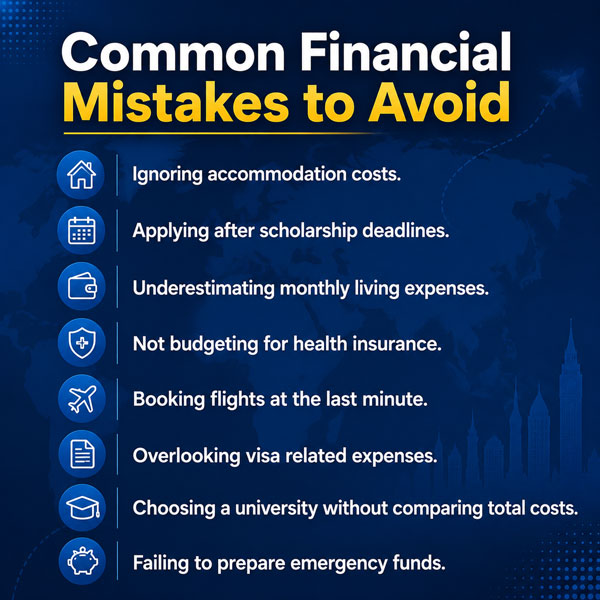
Common Financial Mistakes to Avoid
Many students create a budget based only on tuition fees. However, several additional expenses arise after reaching the destination country. Therefore, careful planning remains essential.
Some common mistakes include:
- Ignoring accommodation costs.
- Applying after scholarship deadlines.
- Underestimating monthly living expenses.
- Not budgeting for health insurance.
- Booking flights at the last minute.
- Overlooking visa related expenses.
- Choosing a university without comparing total costs.
- Failing to prepare emergency funds.
Avoiding these mistakes helps students manage their finances more effectively. Furthermore, early planning creates a smoother admission experience and reduces unnecessary financial pressure throughout the study period.
Best Time to Start Planning for Studying Abroad in 2026
Starting the planning process early provides more university options and reduces unnecessary pressure. Moreover, early preparation gives students enough time to compare countries, prepare documents, improve language test scores, and apply for scholarships before deadlines.
Beginning the process at least eight to twelve months before the preferred intake is generally recommended. Consequently, students can complete every stage of the admission process without rushing.
A typical timeline looks like this:
- Research countries and universities 12 months before intake.
- Prepare for IELTS, TOEFL, GRE, or GMAT 10 to 12 months before intake.
- Shortlist universities and courses 8 to 10 months before intake.
- Submit university applications 6 to 8 months before intake.
- Apply for scholarships immediately after submitting applications.
- Receive admission offers and accept the preferred university.
- Apply for the student visa after receiving the admission letter.
- Book accommodation and travel arrangements before departure.
Students who require personalised support throughout the admission journey can explore Nexa Overseas services for professional guidance from the initial consultation to final departure.
Why Choose Nexa Overseas?
Planning international education involves several important decisions. Choosing the right country, estimating expenses, preparing documents, and meeting application deadlines all require careful attention. Therefore, expert guidance can simplify the entire process and help students avoid costly mistakes.
Nexa Overseas supports students at every stage of the admission journey. From selecting the right university to preparing visa documents, every service is designed to make the application process more organised and stress free.
Students can receive professional support for:
- University and course selection.
- Application and admission assistance.
- IELTS, TOEFL, GRE, and GMAT preparation.
- Scholarship guidance.
- Student visa documentation.
- Visa interview preparation.
- Travel and accommodation guidance.
Students interested in understanding the complete admission process can also visit the Nexa Overseas Blog, where detailed guides cover study destinations, scholarships, visas, and university admissions.
Conclusion
Understanding the cost of studying abroad from India in 2026 is essential before selecting a university or country. Tuition fees, accommodation, insurance, visa charges, and daily living expenses all contribute to the overall budget. Therefore, comparing countries carefully helps students make informed financial decisions.
Canada, Australia, the United Kingdom, Germany, the United States, and Ireland each offer unique advantages. However, the right destination depends on academic interests, career goals, preferred lifestyle, and available budget. Consequently, researching every option before applying can prevent unnecessary expenses later.
Planning early also improves scholarship opportunities, simplifies financial preparation, and provides enough time to complete university applications without pressure. In addition, organising documents in advance makes the admission and visa process much smoother.
Students seeking expert guidance can contact Nexa Overseas for a free consultation. Professional counselling helps students compare universities, estimate education costs, prepare applications, and confidently move towards studying abroad.
Frequently Asked Questions
1. Which country has the lowest cost of studying abroad from India in 2026?
Germany remains one of the most affordable destinations because many public universities charge little or no tuition fees. However, students should still budget for accommodation, health insurance, and living expenses.
2. Which country offers the best value for Indian students?
Canada, Germany, and Ireland are often considered excellent options because they combine quality education, career opportunities, and favourable post study work options.
3. How much does it cost to study abroad from India in 2026?
The annual cost depends on the destination. On average, students may spend between ₹12 lakh and ₹45 lakh per year, including tuition fees and living expenses.
4. Can scholarships reduce study abroad expenses?
Yes. Many universities and government organisations offer scholarships based on academic performance, leadership, or financial need. Therefore, applying early improves the chances of receiving financial assistance.
5. Which expenses should students include apart from tuition fees?
Students should budget for accommodation, food, transportation, health insurance, visa fees, books, flight tickets, and personal expenses.
6. Is studying in Germany cheaper than studying in Canada?
Generally, yes. Germany usually has lower tuition fees, while Canada often offers stronger post graduation work opportunities. Therefore, the better option depends on personal priorities.
7. When should students start planning for studying abroad?
Starting eight to twelve months before the preferred intake provides enough time for university selection, entrance exams, scholarships, documentation, and visa processing.
8. Which entrance exams are commonly required for studying abroad?
Many universities require IELTS or TOEFL. Depending on the programme, GRE or GMAT may also be necessary.
9. Can students work while studying abroad?
Yes. Several countries allow international students to work part time during their studies. However, working hour limits vary according to immigration regulations.
10. How can Nexa Overseas help students planning to study abroad?
Nexa Overseas provides guidance for university selection, admission applications, exam preparation, scholarship support, visa documentation, and personalised counselling throughout the study abroad journey.
Sources:

Related Posts


Comments (0)